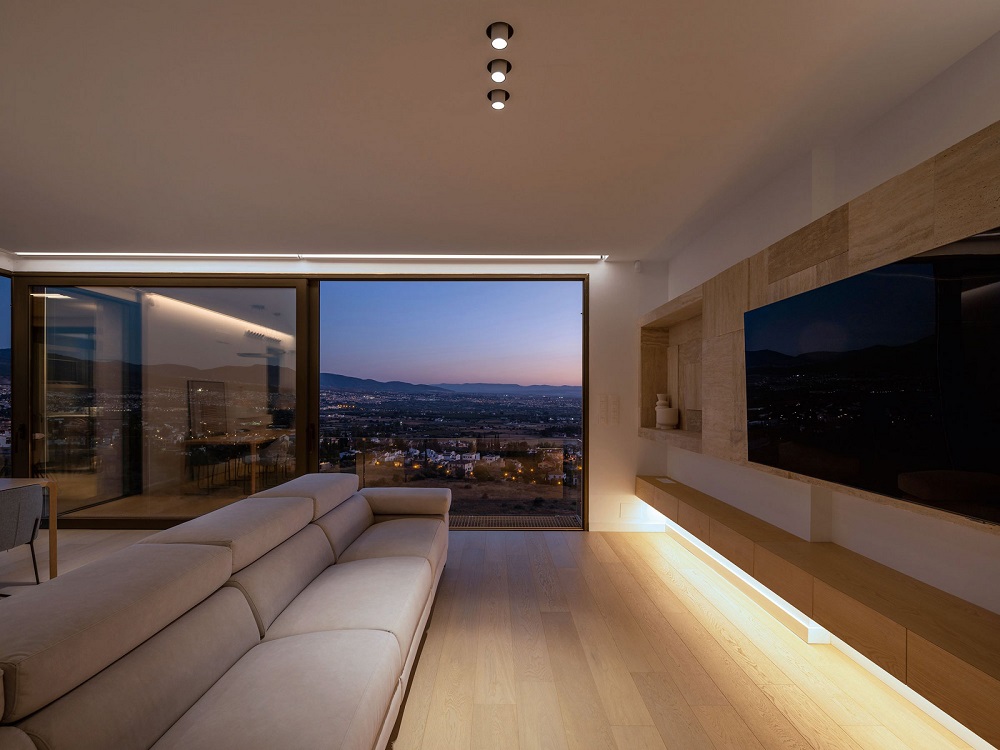
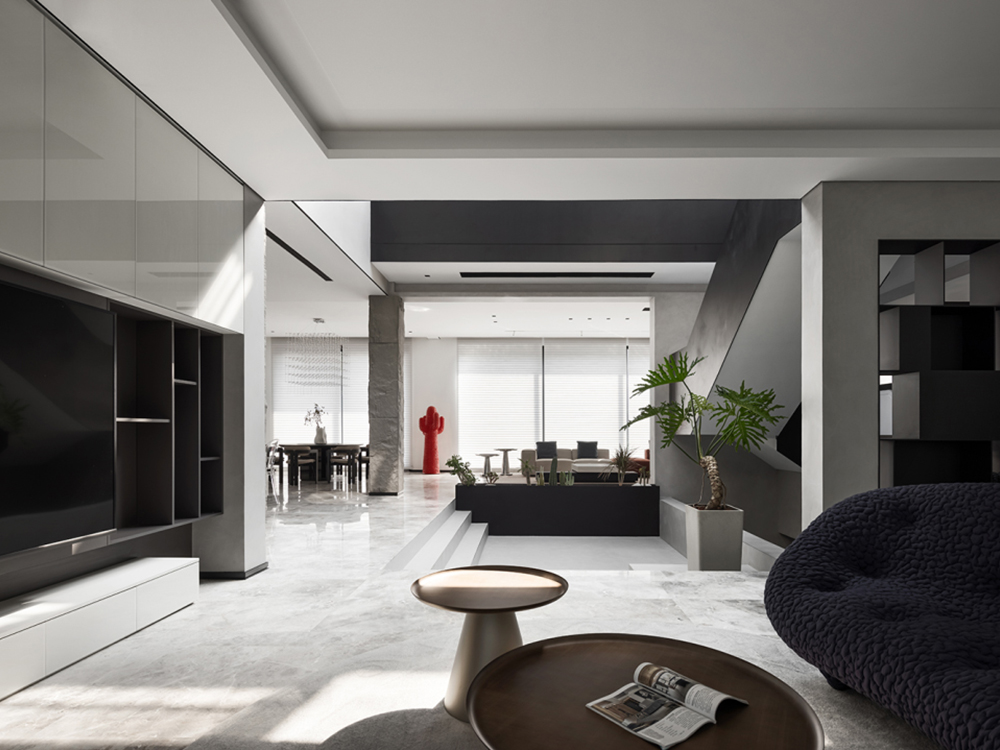
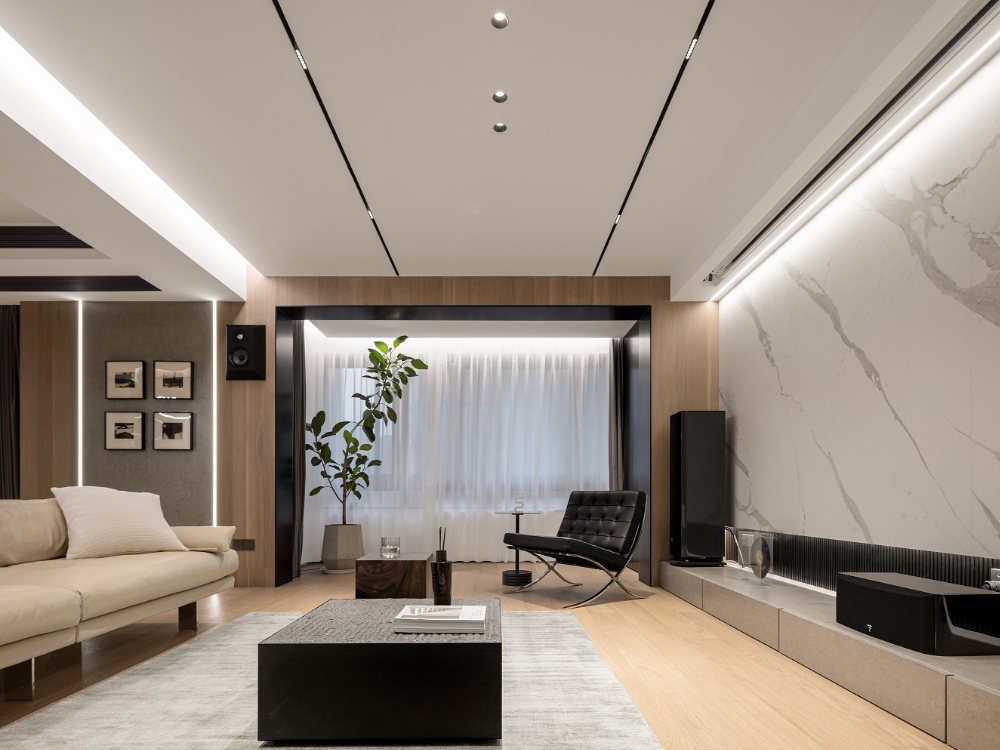
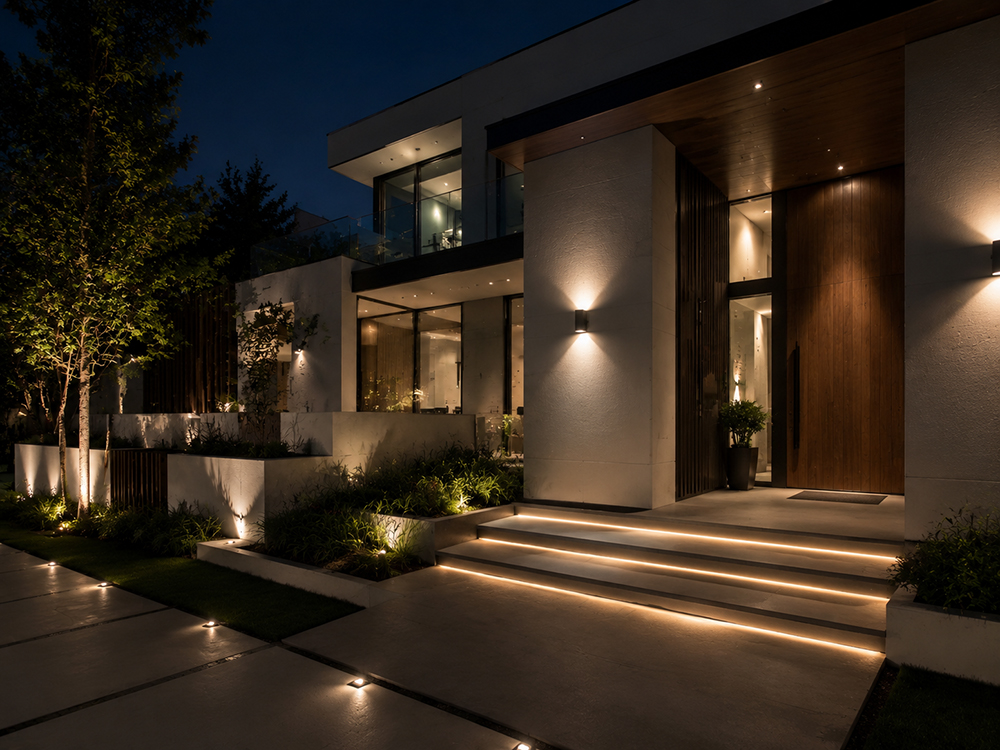
When choosing recessed lighting for a modern home, the fixture itself is only part of the decision. The way that fixture meets the ceiling can have just as much impact on the final look.
That is where trimless vs trim recessed lighting come into the picture.
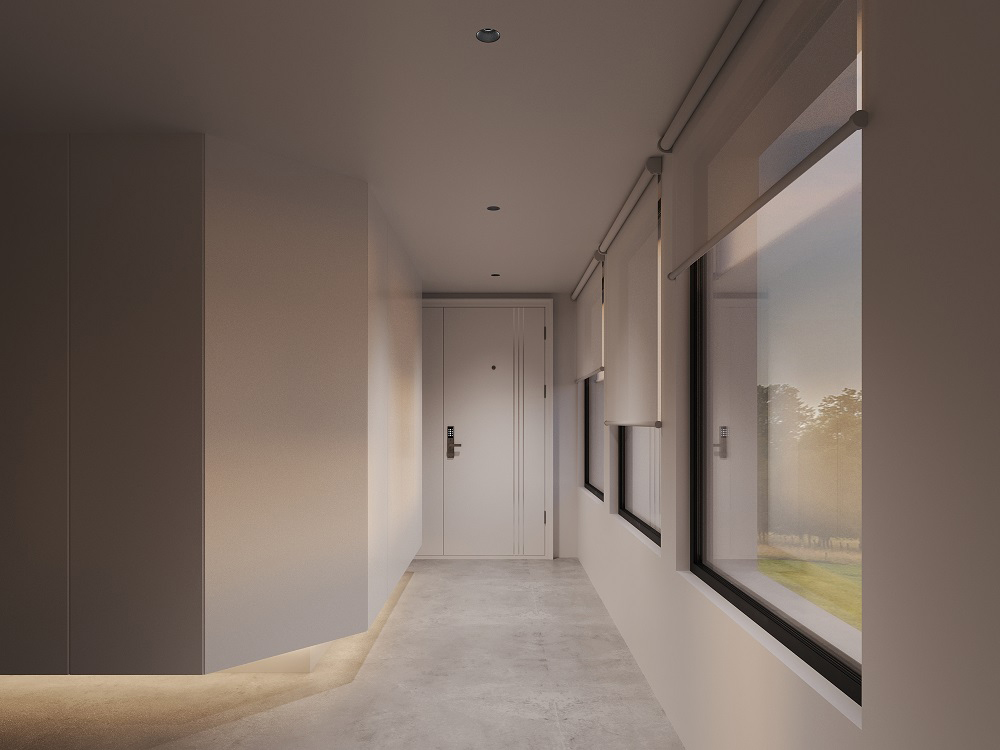
At first glance, the difference of trimless vs trim recessed lighting may seem simple: one has a visible trim, while the other does not. But the choice affects more than appearance. Installation, ceiling finish, maintenance, project timing, and overall design style can all play a role.
So, trimless vs trim recessed lighting which one is better?
The short answer is: neither is universally better. It depends on the look you want, the type of project you’re working on, and how much installation complexity you’re comfortable with.
What Is Trim Recessed Lighting?
Trim recessed lighting is the more traditional approach to recessed ceiling lighting.

The light fixture is installed inside the ceiling, while a visible trim or flange sits around the opening. That trim creates a finished transition between the fixture and the ceiling surface.
This design has been used in residential and commercial lighting for years because it is practical, familiar, and relatively straightforward to install.
Trimmed recessed lights are available in many sizes, finishes, beam angles, and configurations, making them suitable for everything from kitchens and living rooms to offices and retail spaces.
The visible trim can also become part of the design. A black trim, for example, can create a subtle architectural accent, while a white trim can blend more naturally with a white ceiling.
In other words, the trim doesn’t necessarily have to disappear. Sometimes it is part of the look.
What Is Trimless Recessed Lighting?
Trimless recessed lighting takes a different approach.

Instead of leaving a visible flange or bezel around the fixture, the mounting frame is integrated into the drywall or plaster surface. Once the ceiling is finished, painted, and properly blended, the fixture has little or no visible trim.
You may also see trimless recessed lighting described as:
- Plaster-in lighting
- Mud-in lighting
- Trimless downlights
- Frameless recessed lighting
- Trimless LED downlights
The goal is simple: make the ceiling look uninterrupted and let the light itself become the visual element.
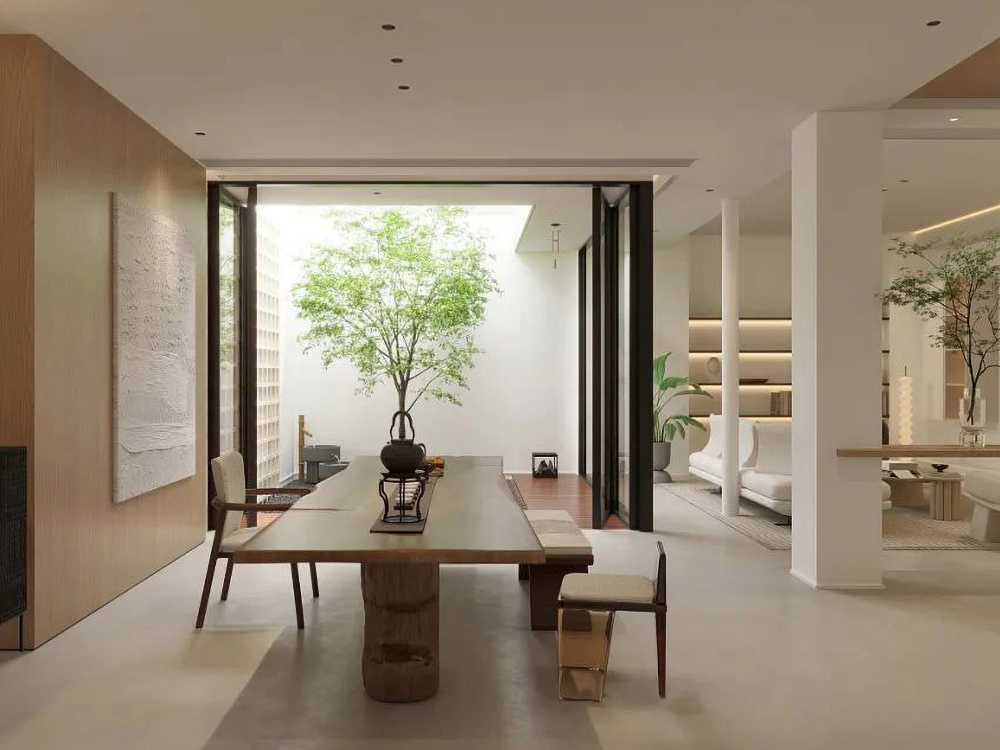
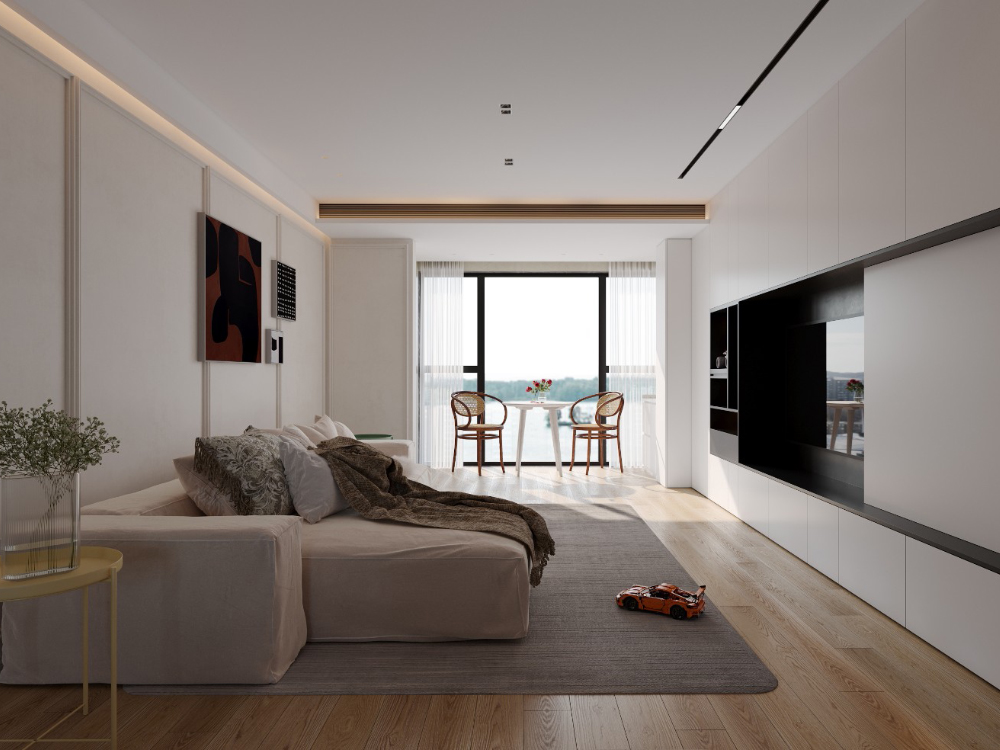
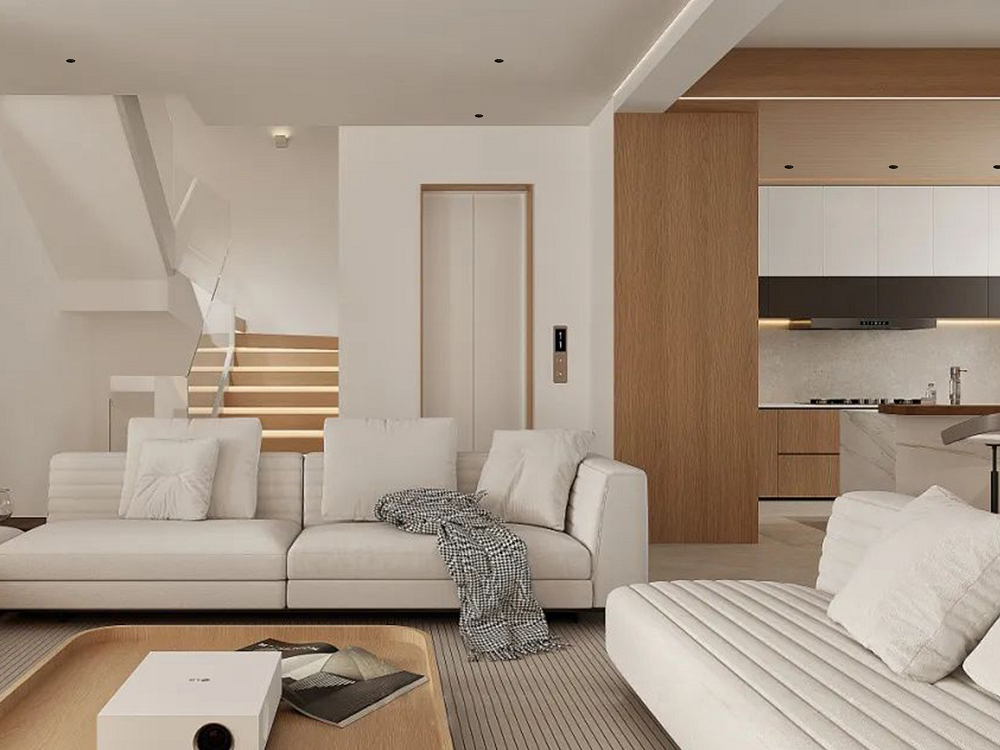
This approach is particularly popular in minimalist and contemporary interiors where designers want to reduce visible hardware and keep the ceiling visually clean.
Trimless vs Trim Recessed Lighting: The Main Differences
| Feature | Trim Recessed Lighting | Trimless Recessed Lighting |
| Visible trim | Yes | No visible trim after finishing |
| Overall appearance | Clean and defined | Seamless and architectural |
| Installation | Generally simpler | Requires more finishing work |
| Drywall/plaster work | Limited | Requires careful integration |
| Installation timing | Flexible | Best coordinated before final finishing |
| Maintenance | Generally easier | Can require more care |
| Design style | Versatile | Minimalist and architectural |
| Best for | New construction & renovations | High-end new construction & renovations |
| Ceiling appearance | Fixture remains visually defined | Fixture visually blends into ceiling |
The biggest of trimless vs trim recessed lighting difference is therefore not the LED technology itself. It is the relationship between the fixture and the ceiling.

Trimless vs trim recessed lighting, Trimless Lighting Creates a More Seamless Ceiling
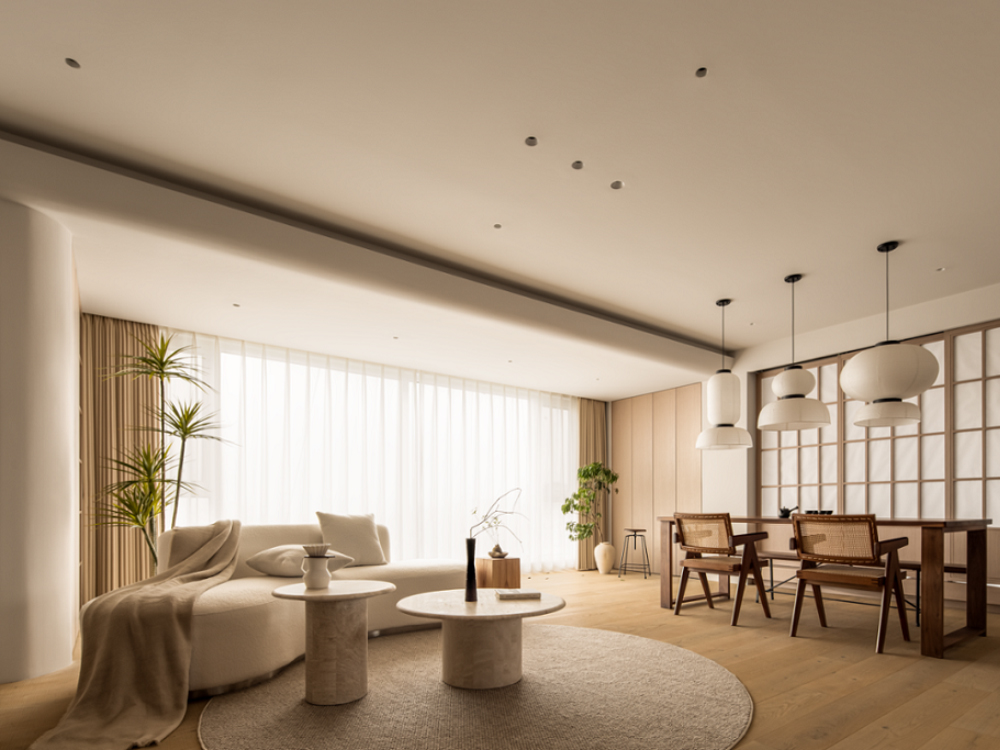
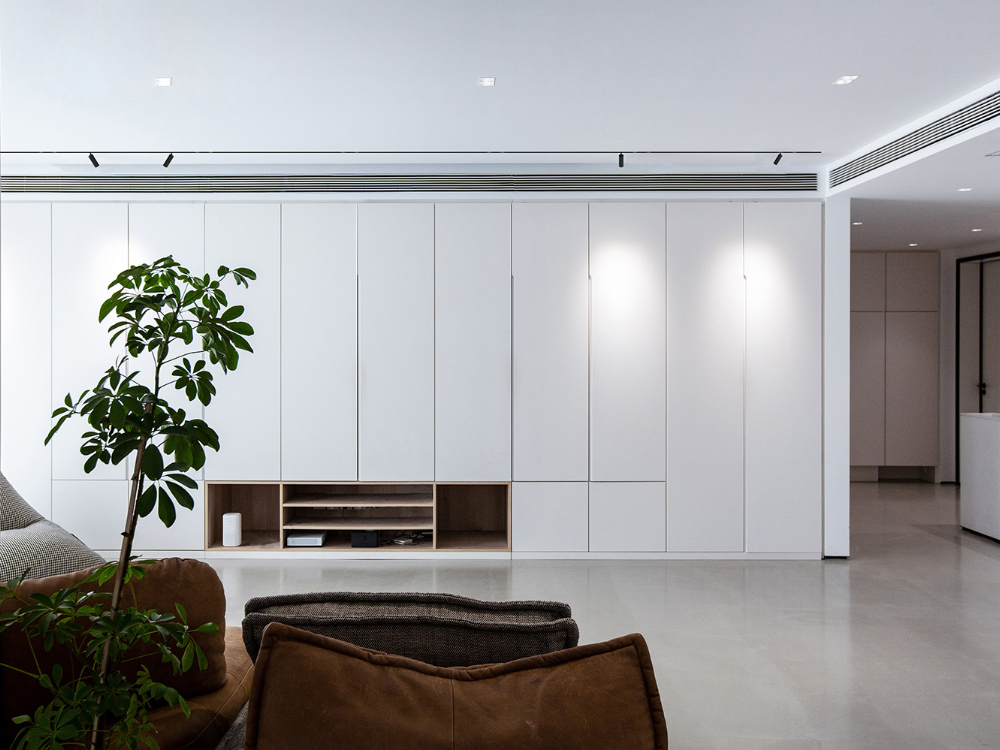
This is probably the biggest reason designers choose trimless recessed lighting. With a traditional trimmed fixture, your eye can usually see a circular, square, or rectangular border around the light. With a properly installed trimless fixture, that border disappears. The result is a ceiling where you notice the light, rather than the fixture.
This can work especially well in:
- Modern living rooms
- Minimalist kitchens
- Bedrooms
- Hallways
- Home offices
- Luxury residential interiors
- Galleries
- Hotels
- Retail and commercial spaces
For spaces with clean architectural lines, fewer visible fixture details can make the entire ceiling feel calmer and more cohesive.
But Trimless Lighting Requires More Installation Precision
There is a trade-off.
Trimless recessed lights are not simply standard recessed lights with the trim removed. The fixture and ceiling finish need to work together.
The mounting frame needs to be positioned correctly, and the drywall or plaster must be finished carefully around the fixture. Sanding, joint compound, and painting all become part of the installation process.
If the surrounding surface is uneven or the fixture is not properly aligned, the finished result can be much less impressive.
That is why trimless lighting is often best considered during the planning and construction stage rather than as a last-minute replacement.
Industry sources similarly describe trimless or plaster-in fixtures as requiring closer coordination with drywall/plaster finishing than standard recessed fixtures.
Trimless vs Trim Recessed Lighting, What About Installation and Maintenance?
This is where trim recessed lighting has a practical advantage.
A conventional trimmed recessed light generally has a clearly defined fixture edge. Installation can be more straightforward, and replacing or servicing the fixture is often easier.
Trimless lighting requires more attention to the ceiling finish. Once the fixture is fully integrated into the drywall, future work around the fixture may require more care to avoid damaging the finished surface.
That does not mean trimless lighting is difficult to maintain. It simply means that appearance and serviceability need to be considered together.
For a new-build luxury home, the seamless finish may be worth the additional installation effort.
For a renovation where speed and easy access are priorities, a trimmed recessed fixture may make more sense.
Trimless vs trim recessed lighting, Which One Looks More Modern?
If your goal is a minimalist architectural ceiling, trimless usually has the edge.
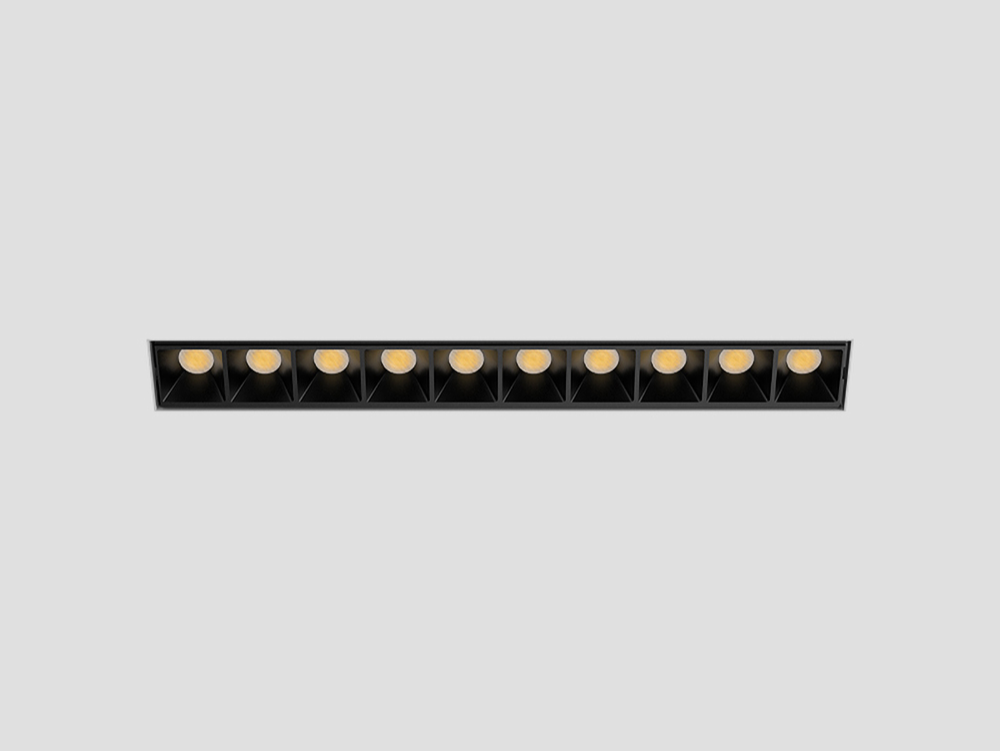
A series of trimless downlights can create a very clean ceiling composition because there are fewer visible borders interrupting the surface.
However, modern does not always mean trimless.
A well-designed trimmed recessed light can also look extremely contemporary. For example, a dark trim can intentionally contrast with a light ceiling and become part of the interior design.
So rather than asking:
“trimless vs trim recessed lighting, Which one looks more modern?”
A better question is:
“Do I want the lighting fixture to be visible as part of the design?”
If the answer is no, trimless is worth considering.
If the answer is yes, a carefully selected trim can add definition and contrast.
P. GEEK 3″: One Lighting Modular, More Than One Installation Style
This is where the XRZLux P. GEEK 3″ series becomes particularly useful.

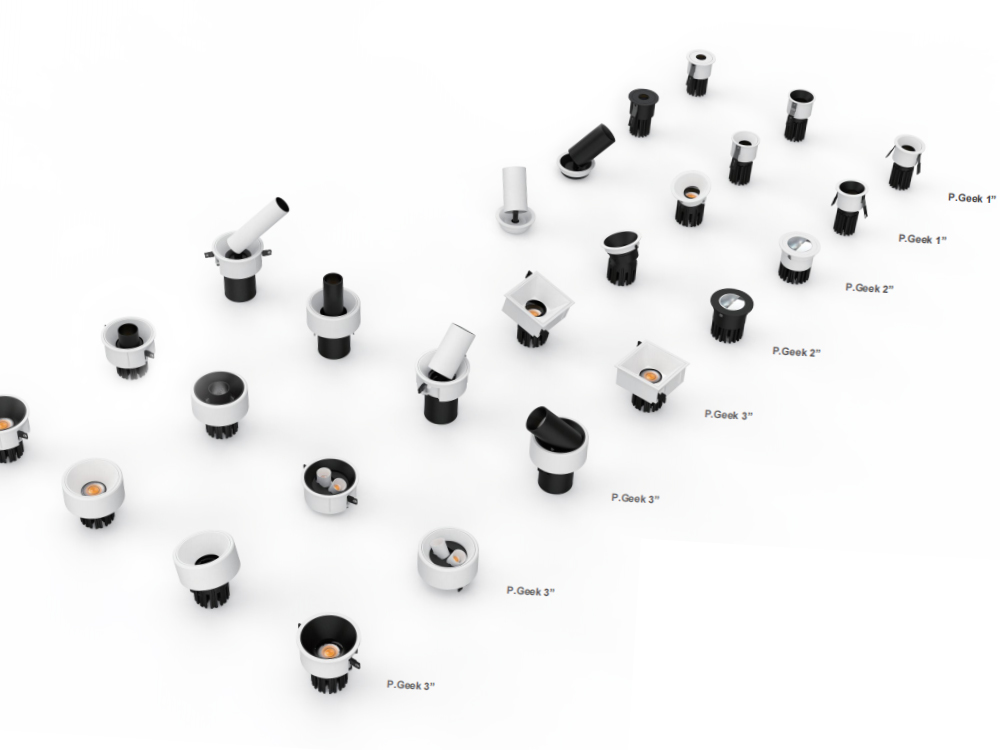
The P.GEEK family includes compact architectural recessed lighting designed for clean ceiling applications, with installation options that can accommodate different design requirements.
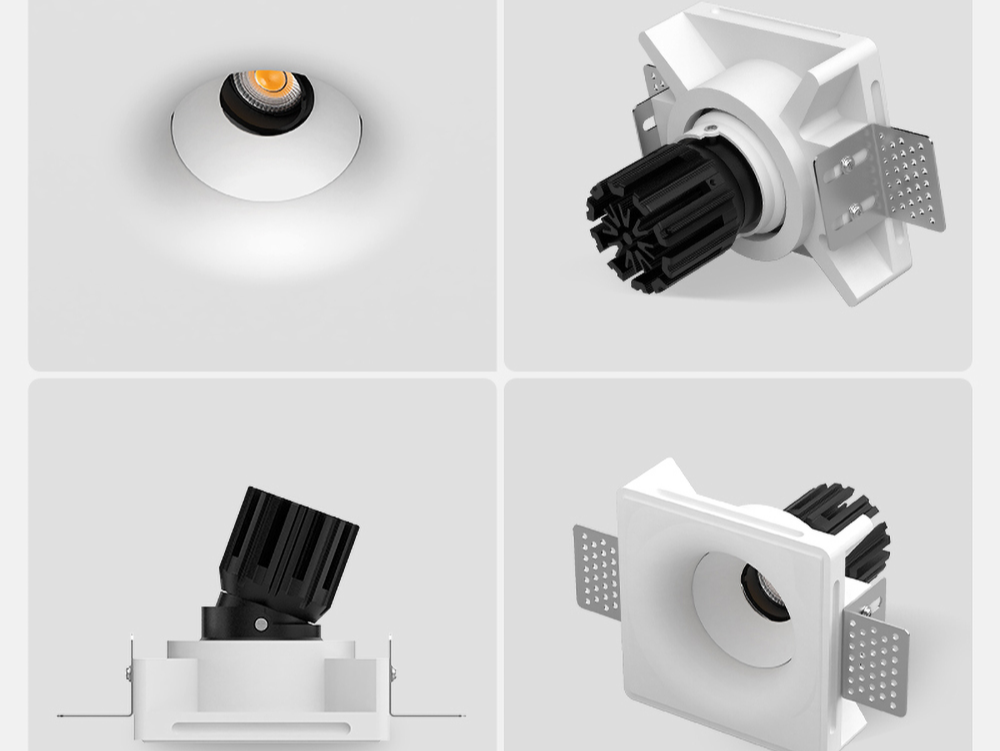
For example, the P.GEEK 3″ product documentation shows both 4mm Microflange and Trimless Drywall installation configurations.
That gives designers and lighting professionals more flexibility when specifying recessed lighting.
Instead of choosing a fixture based only on its appearance in a product photo, you can consider how it will actually integrate with the ceiling construction.
Microflange Installation
A microflange provides a very small visible edge around the fixture.
It can be a good choice when you want a refined recessed appearance without requiring a completely invisible fixture edge.The small trim detail also provides a clear visual transition between the light and ceiling.
Trimless Drywall Installation
For a more seamless architectural appearance, the trimless drywall installation integrates the fixture into the finished ceiling.
After the drywall finishing and painting are completed, the visible fixture edge is minimized, leaving the light aperture as the main visual feature.
This makes the configuration especially attractive for minimalist residential interiors and architectural lighting projects.
Trimless vs Trim Recessed Lighting, When Should You Choose Trimless Recessed Lighting?
Trimless recessed lighting may be a better fit when:
- You want a seamless ceiling
- Minimalist design is a priority
- You are working on a new construction project
- The ceiling finish can be coordinated with the lighting installation
- You want the light source to receive more attention than the fixture
- You are designing a high-end residential or architectural interior
It is particularly effective when the overall design philosophy is “less fixture, more architecture.”
Trimless vs Trim recessed lighting: Which One Is Right for Your Project?
There is no single winner.
Choose trim recessed lighting when practicality, installation flexibility, and serviceability are high priorities.
Choose trimless recessed lighting when a seamless architectural finish is more important and the project can accommodate more precise ceiling finishing.
And if you are still deciding, consider using both.
A project does not necessarily have to use one installation style everywhere. Trimless fixtures can be used in visually important areas such as living rooms, dining spaces, or feature corridors, while trimmed recessed lights can be used where accessibility and practicality matter more.
That is often the smarter way to approach architectural lighting.
- Trim recessed lights offer flexibility, practicality, and a familiar finished appearance.
- Trimless recessed lights take a more integrated approach, allowing the ceiling to remain visually clean while the light itself does the talking.
For modern residential and architectural projects, the best choice comes down to design intent, installation conditions, and long-term practicality.
And if you want the flexibility to explore both approaches trimless vs trim recessed lighting, the XRZLux P. GEEK series is a good place to start.
Explore the P.GEEK recessed lighting collection to compare compact recessed lighting solutions for modern architectural interiors.